
Reporting a board can actually check
An estate or BID scheme produces a great deal of data, and in most places almost none of it reaches the people who decide whether the scheme continues. This is reporting that answers the questions a BID or estate manager is actually asked, in a form somebody can check rather than admire.

The four questions a board asks
Every board paper comes back to the same four questions. A scheme's reporting should answer each of them.
What did the levy buy?
The answer should be the operational record over a period: incidents handled, footage provided, vehicles flagged, cameras working. Not an anecdote from last Tuesday.
Is the place getting busier?
Pedestrian and vehicle movement by location, over time. That is the evidence that matters at a renewal ballot and in a funding application.
Where do we stand on net zero?
The question most districts have committed to publicly and can least easily evidence. Covered below.
Is the system actually working?
Camera health, in states an operator can read rather than a status code. And an approval gate: no newly added camera can push data into your reporting until an administrator has approved it.
The approval gate sounds like housekeeping until the first time somebody asks where a number came from.
Net zero reporting, from vehicles you were already counting
Most districts have a net zero commitment. Considerably fewer can produce a number behind it.
A scheme that reads vehicles at the ways in and out is already collecting what is needed. Each read is checked against DVLA records, so the counts can be broken down by:
- Fuel type: the petrol, diesel, hybrid and electric mix moving through the place
- Vehicle age and Euro rating: the emissions standard of what is actually using your roads
- Volume and direction, so change can be tracked over a term rather than asserted at the end of one
From those counts comes a transport emissions figure you can track year on year, alongside air-quality data where a scheme collects it.
Why transport is the part worth measuring. Domestic transport was the largest emitting sector in the UK in 2022, responsible for 28% of greenhouse gas emissions, on the Department for Energy Security and Net Zero's final figures. For a place whose levers are mostly about how people and vehicles move, that is the part of the problem a BID can actually influence, and the part a camera scheme can already see.
What it is not. This measures vehicles moving through the place. It is not a full carbon account, it does not cover buildings or energy, and it should never be presented as one. What it is, is a real, repeatable series for one substantial component, which is considerably more than most districts have.
Reports that leave the building
A dashboard nobody exports is a dashboard nobody uses. The reporting produces documents you can attach to a board pack, a funding application or a member newsletter, rather than a screen somebody has to log into and interpret.
The useful test for any reporting feature is whether the output survives leaving the system. A number on a screen is not evidence at a board meeting. A dated, exportable report with a stated method is.

The platform, named plainly
The platform is the software layer where the vehicle reads, the movement counts, the environmental data and the camera health all arrive and are assembled into the reporting above.
Two boundaries on it, both of which we would rather say here than have you find out later.
It is not a video management system.
You do not watch live camera feeds in it. It is a management, reporting and incident layer; the video stays in your camera software. Live viewing and reporting are different jobs, and a product that claims to be excellent at both is usually mediocre at one.
It does not require new cameras.
Newer and older cameras run side by side, so upgrading the software layer does not mean replacing hardware that is working.
What we are not going to tell you
A price, before we have seen the place.
We do not publish prices for estate or BID schemes, and you should be sceptical of anyone who does. The figures quoted in this market are usually platform licensing only, excluding the hardware, the installation and the civils, which is most of the cost. Our funding guide sets out who pays for a scheme, and who approves it.
That someone is watching around the clock.
Full-time staffed monitoring is cost-prohibitive for most estates, and we have said so to customers in writing. What we offer is monitoring on demand: analytics prompt a remote monitoring station to look at an event, and how that works is agreed for each estate.
A crime-reduction percentage.
We have not put one anywhere on this site. We do not have one we can source, and a number we cannot show you the working for is worth nothing to you at a board meeting. If a supplier gives you one, ask which scheme, over what period, measured against what baseline, and whether it came from police recorded-crime data or from the supplier.
Specify the reporting before the first camera goes up
The reporting question most schemes answer too late is what they want to report on. Answer it at design stage, not after the first time somebody asks.
There are two reasons, and both cost money to fix afterwards. Camera positions decide what you can report on. A scheme laid out purely for security may have no position that produces a useful footfall series for the street the board cares about. And a comparison needs a baseline, so the first year of data is worth much more if it starts at the beginning of a term than if it starts when somebody asks a question in year four.
Both are cheap to get right on a plan and expensive to retrofit on a pole. Our guide to planning ANPR across an estate covers where each position goes.
Write the reporting into the data protection impact assessment at the same time. Using security data for a purpose nobody wrote down is how schemes get into difficulty with members and the regulator.
Where this has been done
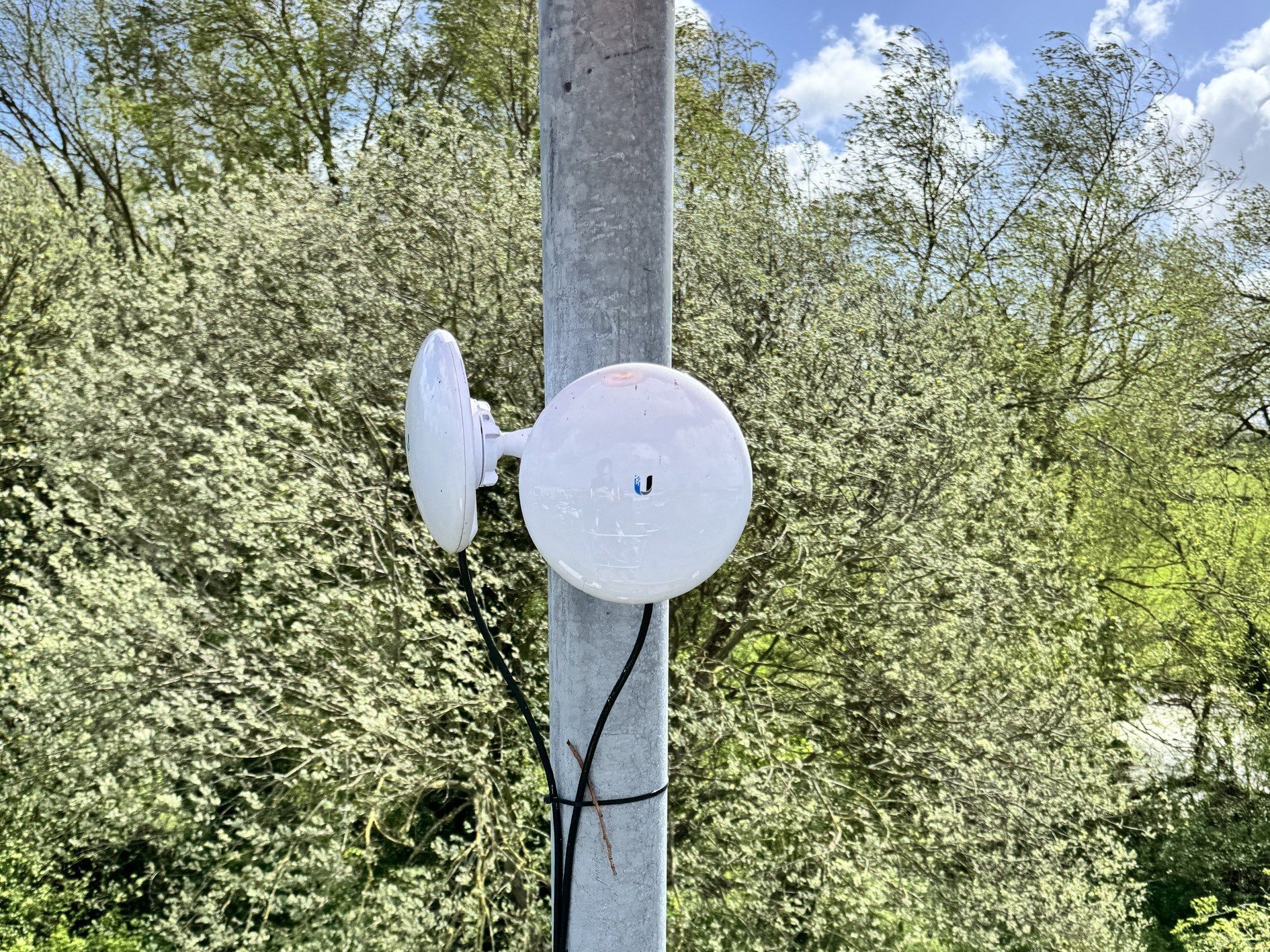
West Chester BID
14 multisensor CCTV cameras, each with four lenses, and 3 ANPR cameras across 14 locations, launched in September 2023. The same vehicle reads now give the BID board vehicle counts, fuel types, vehicle age and Euro emission ratings.
Winsford 1-5 BID
A decade-long programme of estate-wide CCTV and ANPR.
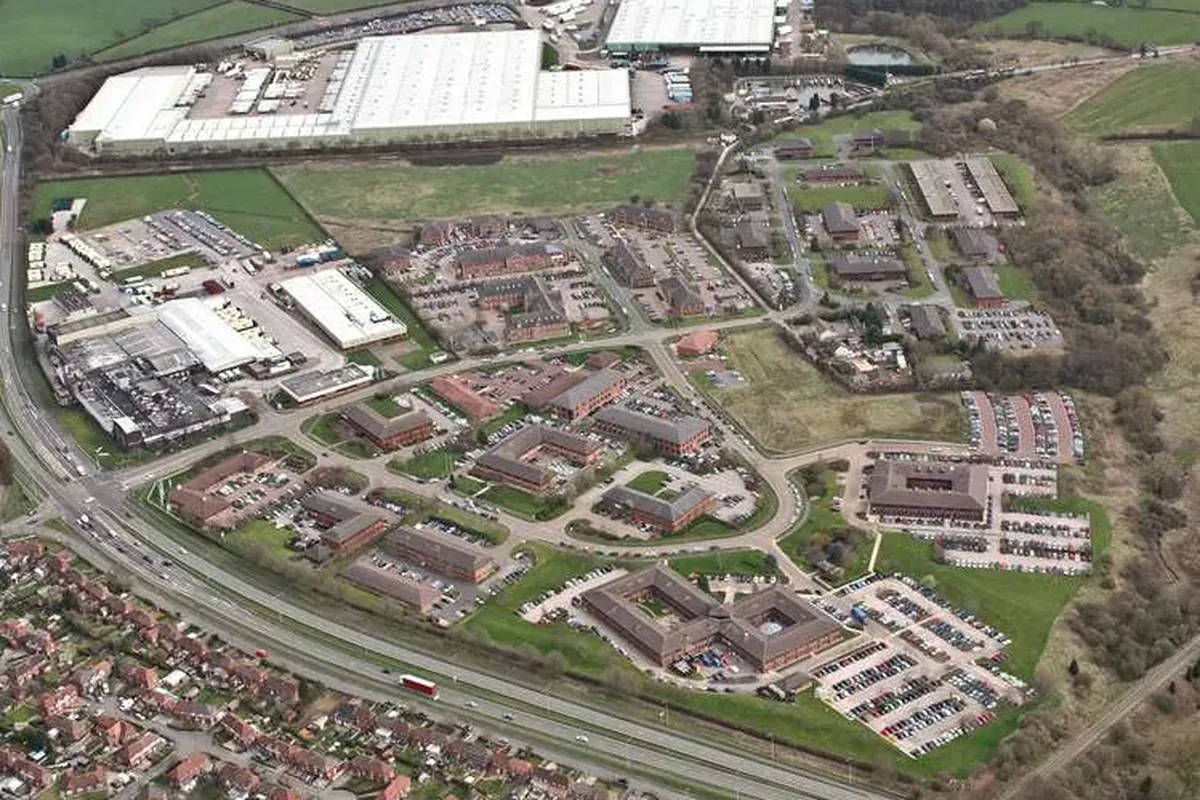
Gadbrook Park BID
Ageing cameras on timed tours replaced with four-lens panoramic units, with ANPR alongside, over a relationship of more than six years.
Where this fits
The vehicles it reports on:
The movement data:
Finding things in footage:
Reporting for a BID board and ballot:
Who controls the data: the BID or estate owner is usually the controller, and OneTek processes the data on its behalf.
Common questions
Does this give us a full carbon account for the district?
No. It measures vehicles moving through the place, broken down by fuel type, age and Euro rating, and turns that into a transport emissions figure you can track year on year. It does not cover buildings or energy, and it should never be presented as a full carbon account.
Why measure transport emissions rather than anything else?
Domestic transport was the largest emitting sector in the UK in 2022, responsible for 28% of greenhouse gas emissions, on the Department for Energy Security and Net Zero's final figures. It is also the part a BID can influence, and the part a camera scheme can already see.
Can we watch live camera feeds in Smart Place?
No. Smart Place is a management, reporting and incident layer. The video stays in your camera software.
Do we need new cameras to get this reporting?
No. Newer and older cameras run side by side, so upgrading the software layer does not mean replacing hardware that is working.
Why do you not publish prices?
The figures quoted in this market are usually platform licensing only, excluding the hardware, the installation and the civils, which is most of the cost. A price before we have seen the place would be a guess.
Bring the questions your board asks you
Tell us which questions your board asks, and we will walk the estate or town centre with you to see what is already there and which of them a scheme can honestly answer. It costs nothing and commits you to nothing.