
CCTV and ANPR for Business Improvement Districts
Smart Place is OneTek's system for connected public and commercial spaces. This page is about one kind of place: a Business Improvement District, where the ground that matters is shared, the money is levied, and everything you spend has to be explained to the businesses that voted for it.
Nobody owns the ground between the doors
Every member of your district secures their own premises. The shop has a shutter, the unit has an alarm, the yard has a gate, and the member pays for all three.
What almost no district has is anybody responsible for what is between them — the service road, the car park, the loading bay, the alley behind the parade. That gap is structural rather than accidental. A member will not fund cameras pointing at somebody else's frontage. The landlord has already let the land. The council owns the highway and has its own budget cycle and its own priorities.
You are the only body with a mandate across the whole footprint and no title to any of it. That is an awkward position to buy security from, and it is the position every BID buys from.
What a district scheme covers, and what it leaves alone
An estate-wide scheme is not thirty single-site installs bought at once. Three design decisions separate one that works from a spread of cameras nobody can watch at once.
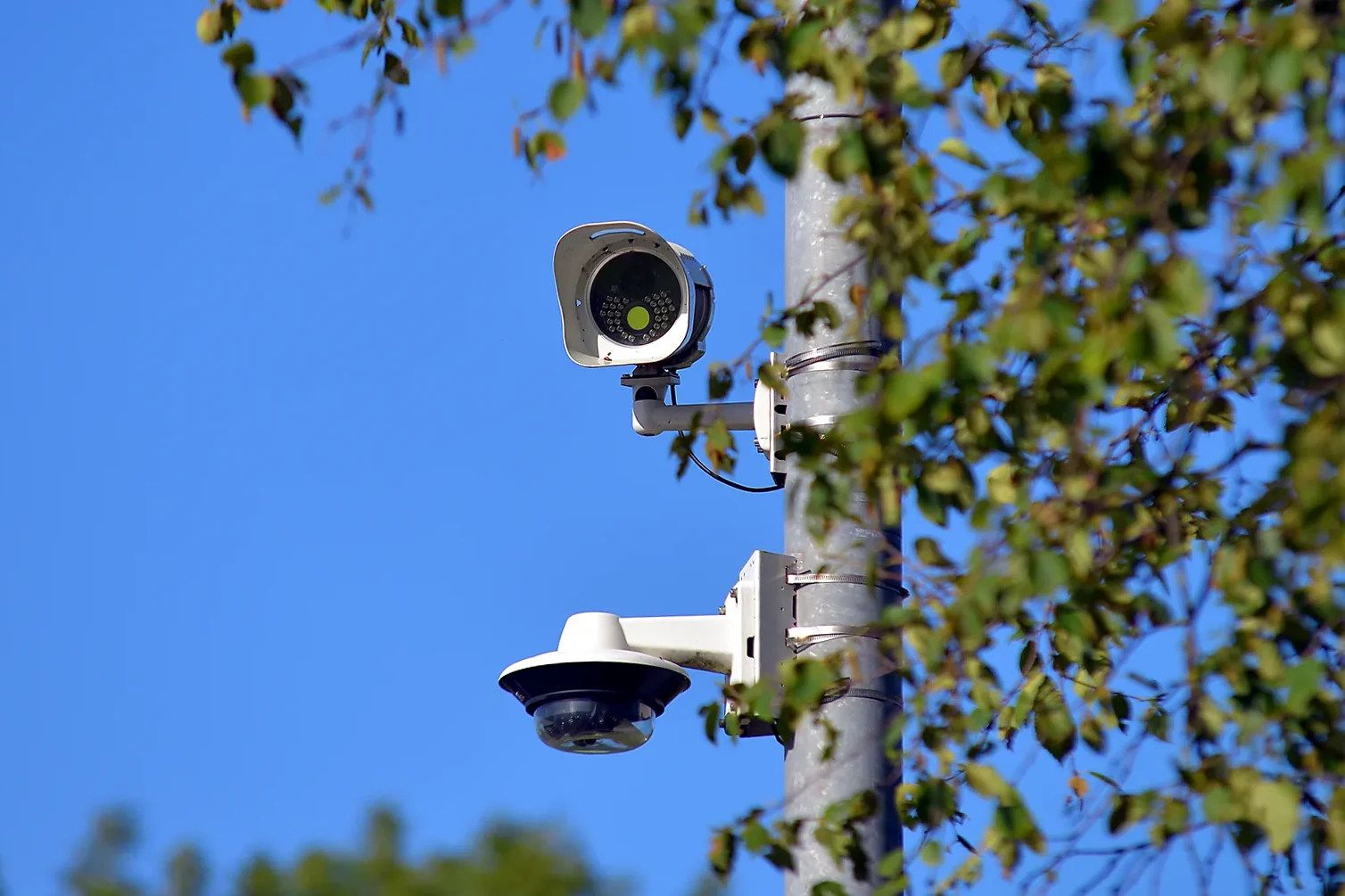
ANPR goes on the ways in and out. If vehicles have to use a small number of routes to enter and leave the district, cameras there see every vehicle twice. That is where plate reading earns its keep.
Cameras go on the shared routes, not on member frontages. Members already cover their own doors. The scheme covers the ground nobody was covering.
Member systems stay exactly where they are. A scheme that asks businesses to scrap equipment they have paid for does not get agreement, and it does not need to. The district layer covers the shared ground and produces usable footage when something happens between the units.
What you get back
- Vehicle movements — counts, times, direction of travel and repeat visits across the district
- Footfall — pedestrian movement on the routes you chose to cover
- Vehicle mix and transport emissions — counts by vehicle type and time of day, the input a district transport-emissions report needs
- Incidents captured and footage requests served — the operational numbers a board asks for
- AI-powered forensic search — find a vehicle or a person across every camera position by time window, direction of travel, vehicle type or clothing colour, in minutes rather than across an afternoon
- Evidence export for police and insurers, with chain-of-custody documentation
Evidence for the ballot, not just for the police
Ask a BID manager what is actually on their mind and it is rarely a crime. It is a renewal ballot with nothing hard to put in front of it.

A camera scheme is one of the few things a district buys that produces its own evidence as a by-product. Vehicle counts by time of day and vehicle type, movements through each way in, footfall on the routes you chose to cover, incidents captured, footage requests served and what came of them. Those are numbers, collected continuously, that describe what your district is actually like — and they are as useful in a funding bid or a business plan as they are in a ballot leaflet.
Two conditions, and both are design-stage decisions rather than things you can add later. The reporting has to be specified before anything is installed; retrofitting it after the first renewal question means the question has already been asked. And somebody has to actually receive it, in a form that goes into a board paper, rather than a dashboard they have to log into and interpret.
If your district has a net zero commitment, the same scheme feeds it. The traffic you are already counting for the security case — how many vehicles, of what type, at what times, through which ways in — is the input a transport emissions report needs, and it costs nothing extra to produce if you specify it at design stage with the rest of the reporting. Be precise about what it is, though: it describes the vehicles moving through your district, not a carbon account for the district as a whole. Buildings, energy and waste sit outside it.
What it will not give you is a crime-reduction percentage. We have no figure we can source, and we are not going to manufacture one for a document your levy payers can read.
The network is usually the hard part
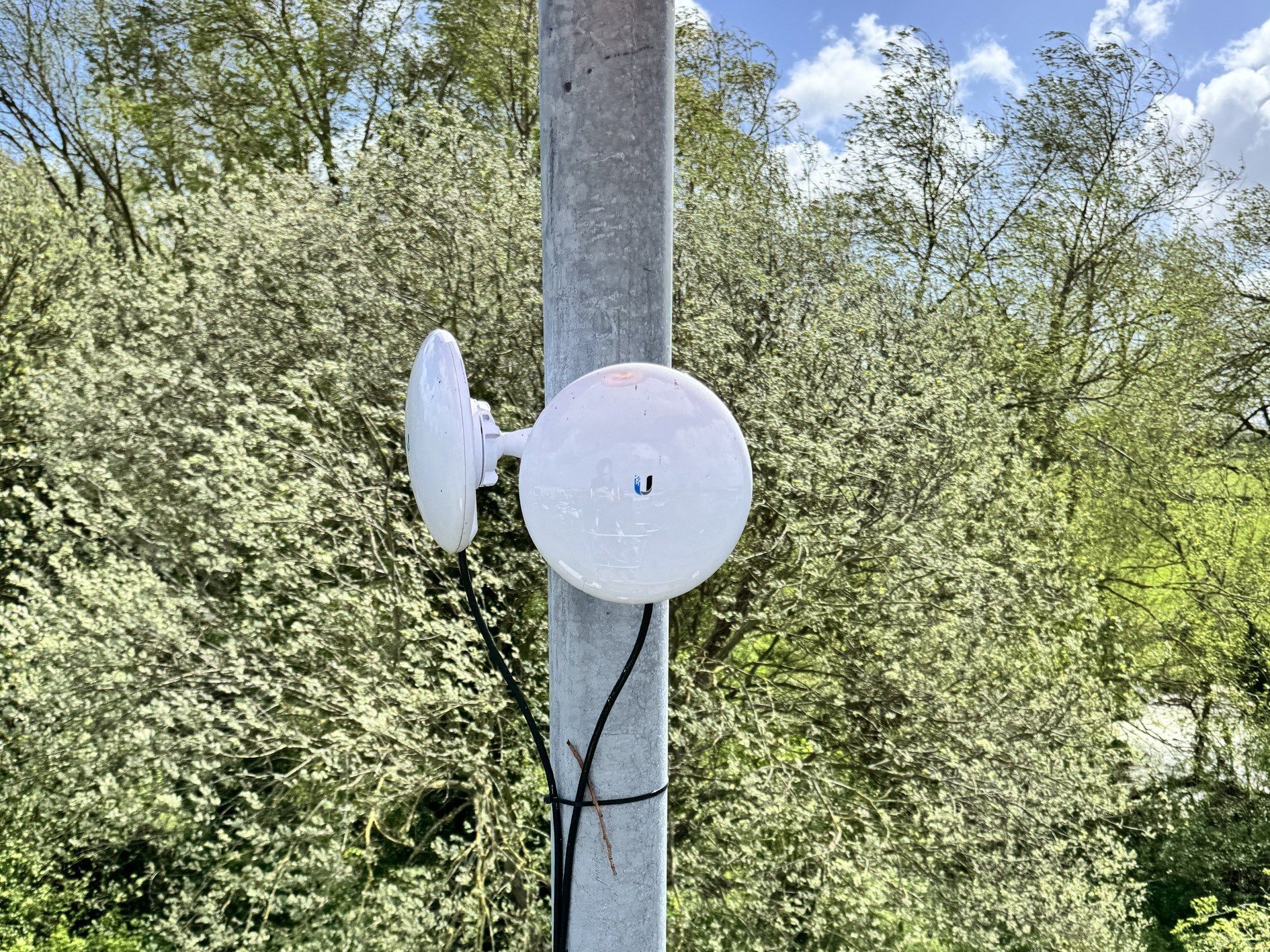
Districts are spread out. The camera positions that make operational sense are routinely the ones with nothing to plug into, and there is rarely a shared network to use. This is where district projects stall, and it is a network engineering job as much as a security one: fibre where it can be laid, wireless where it cannot, designed as one network rather than a collection of links.
Two things follow. Cameras hold their reads locally through an outage and push the queue when the link returns, so a network fault overnight does not cost you the night's data. And once that network exists it can carry business connectivity to members the incumbent has underserved — a benefit you can put in a business plan alongside the security case.
Getting it past your board
Four questions decide whether a scheme happens, and none of them is about cameras.
Who pays, and through which mechanism. Identify which funding route governs approval before anything is designed, because it decides who has to say yes. More on the routes below.
What happens at the end of your term. Camera infrastructure lasts longer than a BID mandate. Who owns the assets, what happens if a ballot fails, and whether the scheme can novate to the council are contract questions, and they are better settled at the start than at year four.
Whether you are allowed to do it. You are, and there is a process. A district scheme needs a data protection impact assessment, a named controller, a stated retention period and signage that tells people where to find out more. It is procedural rather than difficult, and it is one of the most common things that stalls a scheme at committee.
Who can ask for footage, and who decides. On a multi-member district this needs settling in writing before the first camera goes up. A member who has been broken into will ask. So will their insurer, and at some point so will the police.
Most schemes are not funded from one place
The levy is the cleanest route — already collected, already governed, and security sits inside most BIDs' agreed remit. It is rarely the whole amount.
The pattern that recurs is levy plus a capital contribution from somewhere else: a county or unitary council grant, a landlord with a large holding inside the footprint, a police and crime commissioner's fund, or a partnership with the authority that already owns half the columns you want to mount on.
Blended funding is more work, and it is also what makes most schemes affordable. It has one consequence worth knowing before you design anything: each contributor brings its own conditions, its own timetable and, often, its own view on who owns the equipment afterwards.
When a levy payer objects
Some of your members will not want cameras, and they are paying for them either way. That meeting happens on most schemes, and no supplier we have looked at gives you anything to say in it.
What helps is being able to answer four questions plainly, in public, before you are asked:
- What are the cameras for? Written down before installation, in the scheme's own impact assessment, and narrow enough that somebody can check it.
- What are they not for? A scheme bought to produce evidence and quietly grown into a movement-analytics programme is what the ICO's own DPIA template calls function creep. If that is something you intend to do, it should be a decision your board takes, on the record.
- How long is anything kept, and who can see it? Stated, justified, and the same answer every time it is asked.
- How does somebody object? There has to be a route, and it has to be honoured.
None of that is a debating tactic. It is the same paperwork the scheme needs anyway, done early enough to be quoted.
What this has looked like
West Chester BID. 54 AI-enabled CCTV cameras at 20MP and 3 specialist ANPR cameras across 14 locations on the industrial estate, launched September 2023. The ANPR units cover the entrances. The same network that carries the cameras also carries ultra-fast broadband to businesses on the estate.
Winsford 1-5 BID. Three cameras on a wireless network in 2011, grown over a decade into an AI-enabled district-wide CCTV and ANPR scheme handling hundreds of thousands of vehicle movements a month.
Common questions
Do we need our own control room?
No, and you should be cautious of anyone who tells you otherwise. Smart Place is a management and reporting layer, not a wall of screens — the point is that the district's data reaches the two or three people who have to act on it, on whatever they already use. If you want a staffed room, that is a separate conversation with a separate cost, and we would rather have it openly than sell you a screen you will not watch.
How long is footage and plate data kept?
That is your decision as controller, not ours, and it should be written down and justified before the scheme goes live. Plate data in our schemes is held in readable form for 30 days, after which the record is hashed and the original deleted — the movement history survives, the plate does not. A hashed plate is still personal data, and any supplier who tells you hashing makes it anonymous is wrong.
Will this work with the cameras we already have?
Usually. Older and newer ANPR units run side by side, so improving the district layer does not automatically mean replacing hardware that still works.
What does it cost?
We do not publish prices, because a district scheme is a capital project with a survey behind it and a number without a survey is a guess. We will tell you the cost lines to budget for, including the ones districts forget: power to each position, wayleaves, highways licences, column loading, and replacement from year one.
Start with a walk of the district
The first conversation is a walk: where the ways in and out are, where a network can physically go, and who has to approve it. It takes an hour or two, it costs nothing, and what comes out of it is a scheme design that survives a committee. No slides and no pitch deck.