
A major step forward for Smart Place - what the new platform brings to your estate
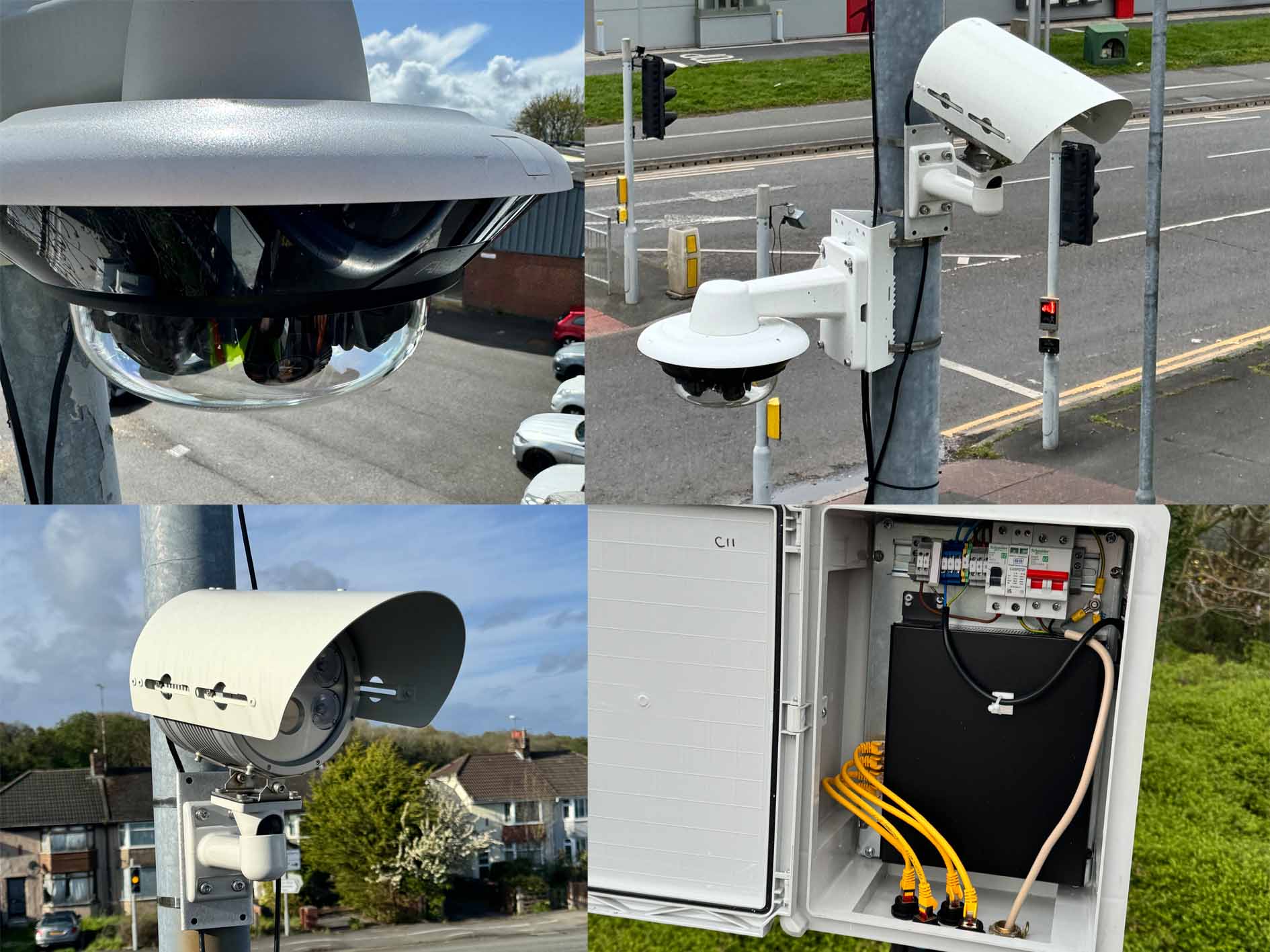
Smart Place has just had its biggest upgrade since launch. After running the platform across three Cheshire deployments — Winsford, West Chester and Gadbrook Park — we've taken everything we've learned and pushed the next version of the platform forward in the areas our customers asked us to push hardest.
The new build is more resilient at the camera edge. Vehicle details from the DVLA come back automatically and become part of the searchable record. The dashboard is faster. Camera health is visible at a glance. And the architecture is built to keep adding the features estates are already asking us about next.
It's now running across our deployments. Below is what's new, and why each change matters when the next levy ballot, board paper or police request lands on your desk.
Plate reads that survive a network drop
Networks fail. The new platform doesn't. When a switch reboots, a fibre link drops or an ISP goes quiet, cameras now hold every read locally and push the entire queue across the moment the line comes back. The technical name is store-and-forward. The plain version is that a network blip overnight no longer costs you the night.
Quietly, this is the change BID managers care about most. CCTV evidence is binary: it either exists or it doesn't, and if it doesn't, no amount of explanation to a board or a police partner makes it acceptable. The Surveillance Camera Code of Practice expects coverage to be defensible. The new platform is built around that expectation.
Searching by colour, make and MOT — not just plate
Every plate read is now automatically enriched with the DVLA record. Make, colour, fuel type, year of manufacture, tax status, tax due date, MOT status, MOT expiry — all of it captured against the read and made part of the searchable history.
That changes what BID and estate teams can ask of their data.
"Show me every diesel HGV through the south gate between 4pm and 6pm last Tuesday" — that's now a single search.
"List vehicles with no current MOT seen on the estate this month" — same.
"How many of last quarter's anti-social behaviour reports involved vehicles still with valid road tax?" — same.
Vehicle data is stored hashed for GDPR retention compliance, with deletion controls built in rather than bolted on. The Information Commissioner's Office requires a Data Protection Impact Assessment before deploying ANPR, and the auditability of how vehicle data is processed and retained is part of standing behind that assessment.
Catch incidents while they're happening
A van rolls into a loading bay at 7:42 on a Tuesday morning. It's not on any tenant's delivery list. The platform broadcasts the read the moment the camera sees it, and if the registration is on a watch list, an alert is on the relevant phone before the driver has stepped out.
This is the difference between CCTV that records what happened and CCTV that does something about it. Warrington BID's monitored control room, working with that second model, responded to around 6,000 incidents in 2025 and supported 600 arrests. That kind of throughput is impossible with passive recording. It requires a system that surfaces things instantly, and a layout that lets a single duty officer act on them without leaving the dashboard.
The platform's live view does both. Reads stream in continuously. A new pending camera shows up the second it connects. A watch list match interrupts everything else. None of it requires anyone to be staring at a wall of monitors.
Knowing which cameras are actually working
The honest answer to "are all your cameras up?" on most estates is "probably." Cameras fail quietly. They drift out of sync. They lose their network. The first sign of a problem is a request for footage that isn't there.
The new platform takes that uncertainty away. Every camera reports its own status continuously: online, offline, clock drift, how long since the last plate, whether it's currently buffering reads. The dashboard turns those signals into messages written for the operator, not the engineer:
- Online
- Online (idle — last plate 5m ago)
- Sending plates (API unreachable)
- Offline (last seen 2h ago)
- Never Connected
You can scan fifty cameras in fifteen seconds and know what each one is doing.
There's also a control built in: a new camera can't push data into the system until an administrator approves it. Anything connecting from an unknown source ends up in a pending queue, waiting on a human decision. For DPIA-conscious estates, that's not a nice-to-have — it's the audit trail you need when somebody asks how a particular camera came to be processing personal data.
Keep the cameras you've got
This is the bit that surprises people most. Upgrading to the new platform doesn't mean upgrading the cameras.
The new build supports the same camera estates the previous version did. Modern ANPR units running over secure HTTPS sit alongside older models still running on legacy connections. The protocol layer is built to be added to, so as new camera ranges launch, support gets bolted on without rebuilding the rest. The cameras you bought last year keep working. The ones you buy next year will too.
The same applies on the operator side. The dashboard runs on a laptop in the office, a phone during a site walk, a tablet in the car park. Operations leads doing a Friday afternoon perimeter check don't have to come back to the desk to see what the cameras saw five minutes ago.
What carrying on with passive CCTV actually costs
- Hours per police footage request on a passive system: 2–4 (industry typical)
- Average response time for a watch-list vehicle on a passive system: never
- Cameras silently dark across an average 50-camera estate at any given time: 3–7
- Cost of a missed BID renewal in officer time alone: £8k+
Each of those line items disappears with a real-time platform behind your cameras.
Why now is the moment to look at this
A few things have shifted in the last twelve months that make a properly instrumented camera platform more valuable than it was even a year ago.
Budget pressure on monitored CCTV is real. In 2025, many UK BIDs faced severe council budget pressures that threatened the future of staffed control rooms. Automation isn't replacing operators — it's giving the operators you can still afford a chance of keeping up.
Reporting obligations are tightening. UK Sustainability Reporting Standards come into force from January 2027. The Environment Act 2021 binds local authorities to a PM2.5 target of 10 µg/m³ by 2040 with annual status reports along the way. The same platform that captures vehicle data captures the evidence base you'll need for both.
Funding is moving in this direction. Plan for Neighbourhoods Phase 2 covers 169 places with up to £20m each over ten years. The places with shovel-ready smart infrastructure plans will move on that money first.
See it on a real estate
The platform is in operation today. West Chester BID uses it for AI-enhanced district-wide CCTV. Winsford Industrial Estate runs 56 cameras through it on a high-speed wireless network at 98% uptime. Gadbrook Park recently upgraded to 4K panoramic units feeding into the same system.
Read the full case study: SMART Place at West Chester BID. (Winsford and Gadbrook case-study pages coming.)
Take the next step
Book a 30-minute walk-through to see the live dashboard operating on a real Cheshire estate. We'll answer your team's specific questions and send you the recording to include in your next board pack.
Smart Places theory & practice
Discover the impact and the future of smart places
A major step forward for Smart Place - what the new platform brings to your estate

Revolutionising West Chester BID Security with Data-Driven Insights

Unlocking the Power of Data: The Future of BID Management
Transform Your B.I.D. Today